

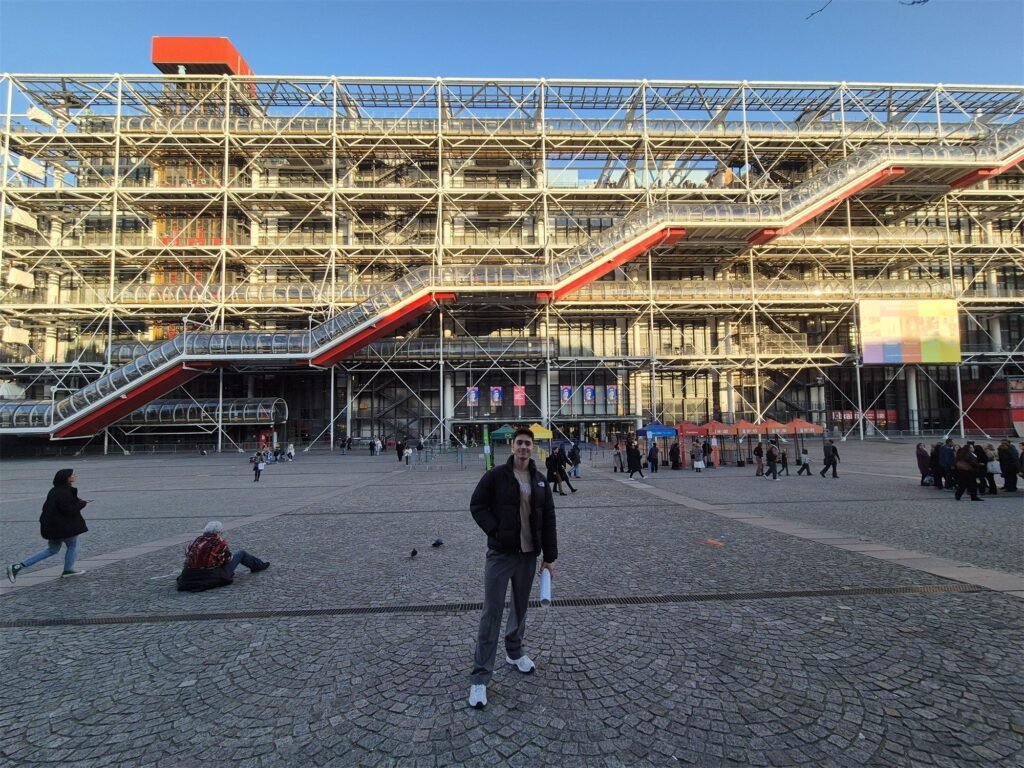
Beaubourg: furniture for the BPI library at the Centre Pompidou
Custom furniture designed by Andrés Mariño Maza for the Bibliothèque publique d’information (BPI), the public library inside the Centre Pompidou in Paris: shelving, study counters, reading tables, internet workstations and reading islands, designed to sit within Renzo Piano and Richard Rogers’ high-tech building.
Andrés Mariño Maza led this intervention of about 50 pieces from design through production and worked directly with the public client throughout. The furniture was made by woodworking and metal workshops in Spain, shipped by Spanish carriers and installed in Paris by French and Romanian teams, with Andrés coordinating every stage.
The brief
In 2021, a former colleague working at the BPI saw some of Andrés’s designs on social media and encouraged him to submit a proposal for several pieces of furniture the library needed to renew. He prepared three options; one of them was selected, and the project began.
The furniture formed part of a wider renovation of the library’s public areas. The works were planned so that the library stayed open throughout, with around 4,000 visitors a day and 2,200 reading places.
- Client: Bibliothèque publique d’information (BPI), Centre Pompidou
- Furniture design, production management, logistics and installation coordination, and client liaison: Andrés Mariño Maza, MARINOMAZA
- Location: Centre Pompidou, Place Georges-Pompidou, 75004 Paris
- Timeline: proposal in 2021; project from 2022 to 2025; main library works from July 2022 to March 2023
- Scope: about 50 custom furniture pieces
- Fabrication: woodworking and metal workshops in Spain
- Shipping: Spanish carriers
- Installation: French and Romanian teams
- Main contractor: Kalam
With sincere thanks to the team at the Bibliothèque publique d’information for their commitment in completing the project on schedule.
Working inside an icon
Andrés’s own chairs usually start from a blank sheet. The Pompidou was the opposite: a building full of references and an icon of modern design. The language of the modern movement, functional pragmatism and the real scale of use meant he had to step back from his usual way of working and design for very specific needs in a very defined context.
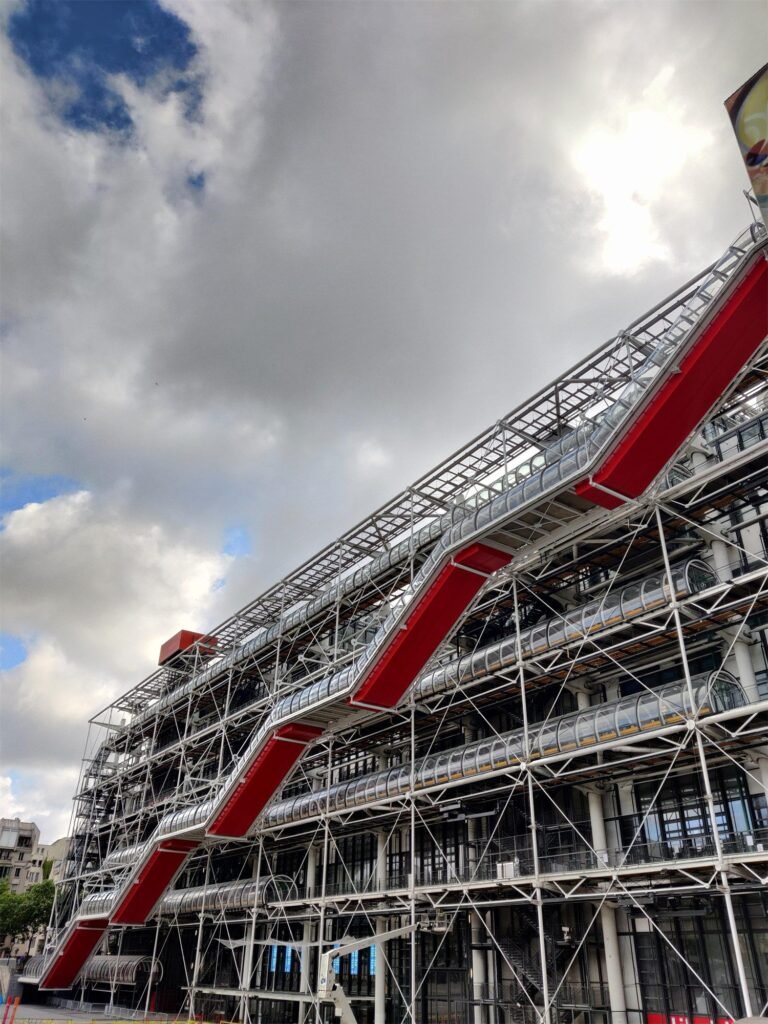
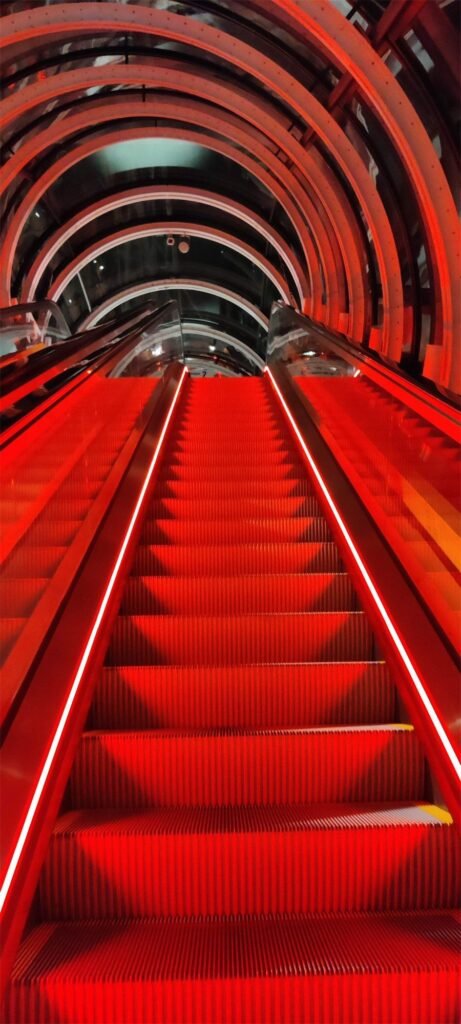
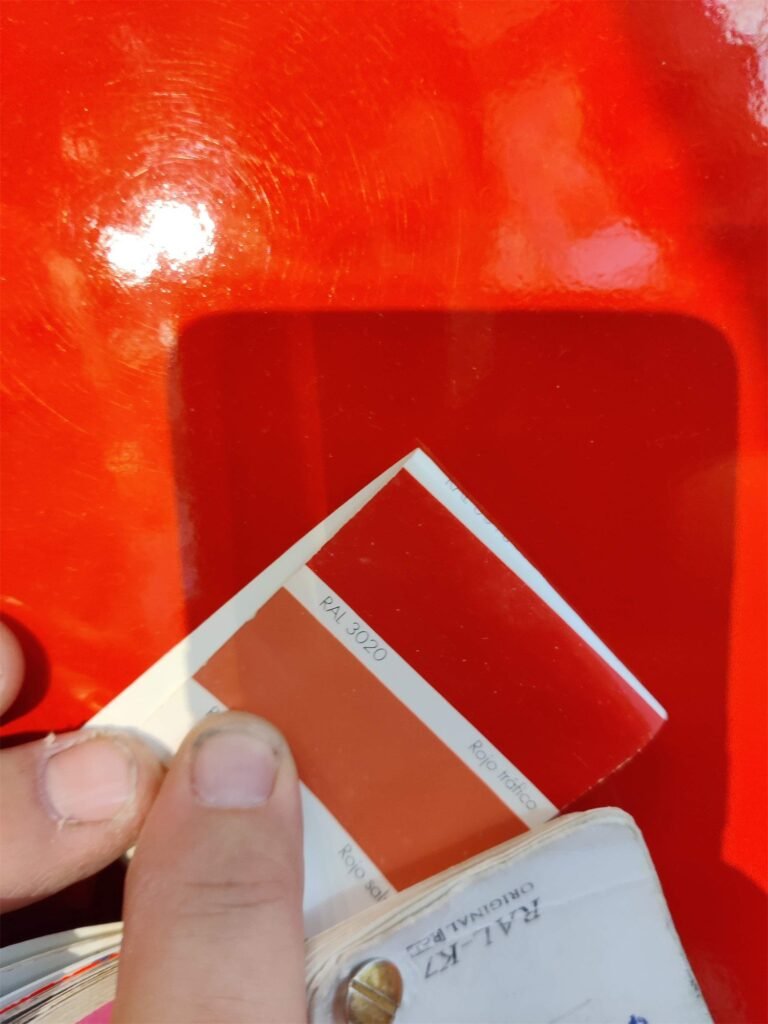
Colour was part of that dialogue. The building is known for its colour-coded structure, and the reds used on the furniture were checked on site against the building’s own surfaces and RAL 3020 traffic red.
Studying the originals
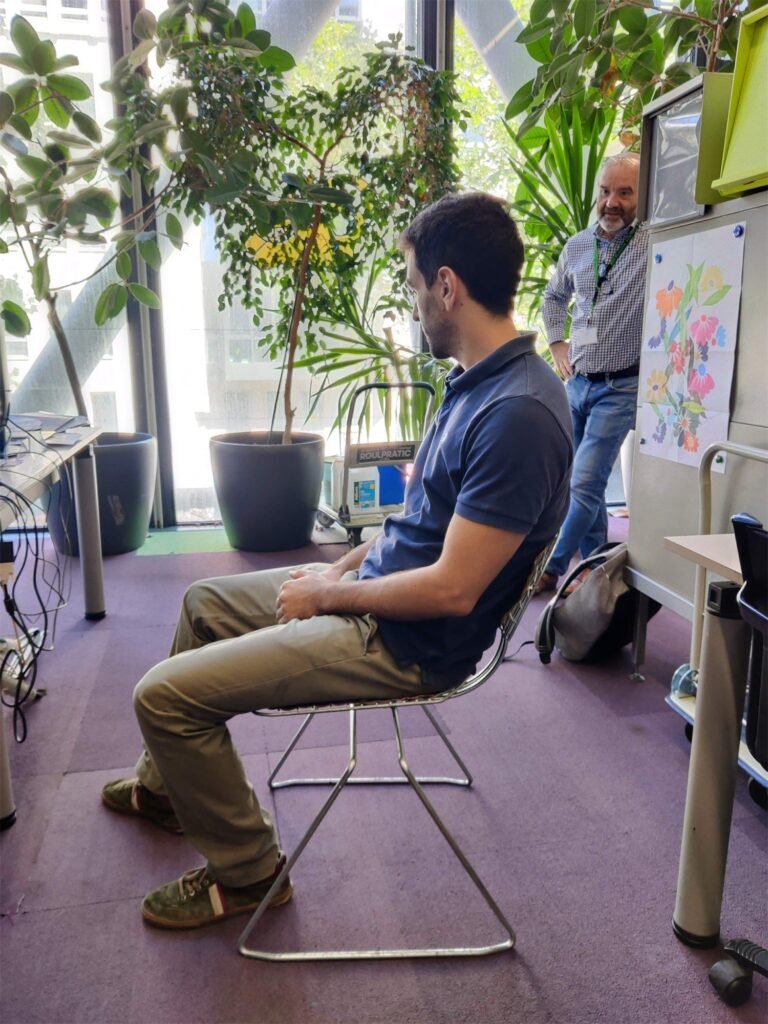
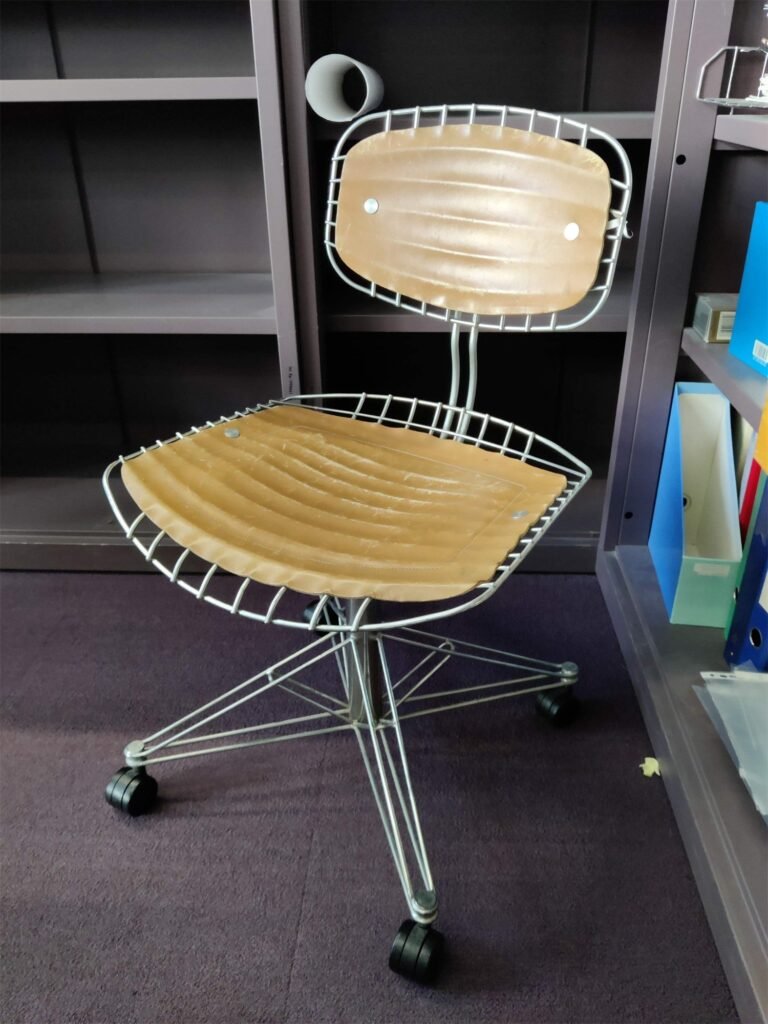
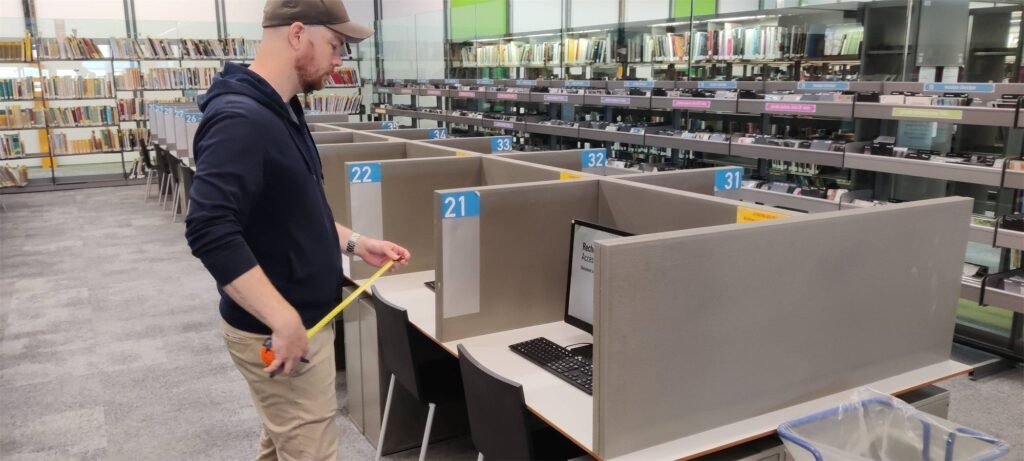
The library’s original 1970s furniture had a strong, geometric presence closely tied to the industrial character of the building. The approach was to keep that formal rigour in the proportions while adding flexibility and warmth: surfaces for devices, integrated power sockets and quieter, more acoustic areas, reflecting how a library is used today. Existing chairs and study carrels were surveyed on site before the new pieces were drawn.
Made in Spain, assembled in Paris
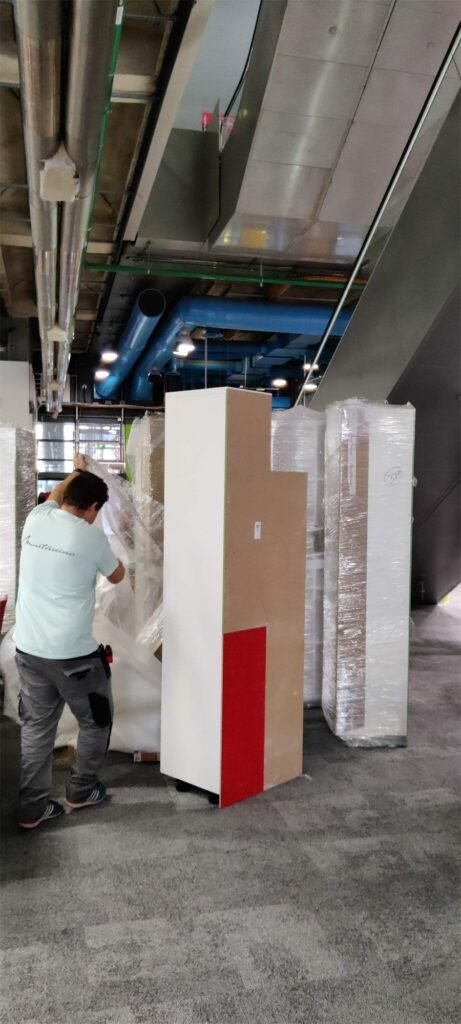
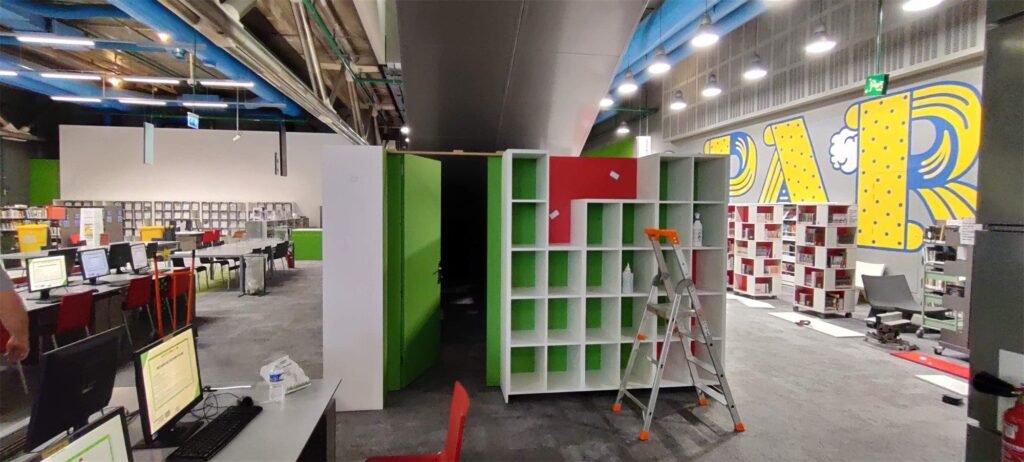
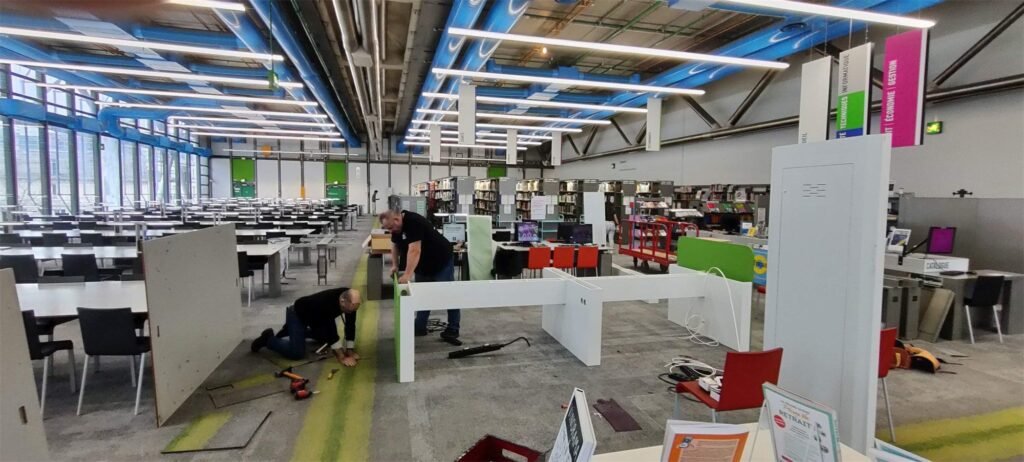
All the pieces were made in Spain. The team used certified, locally sourced wood and CNC cutting to minimise waste, and designed an assembly system that needs no heavy tools, so everything could be put together on site in a building that never closed to the public.
The pieces
Shelving wall under the escalator
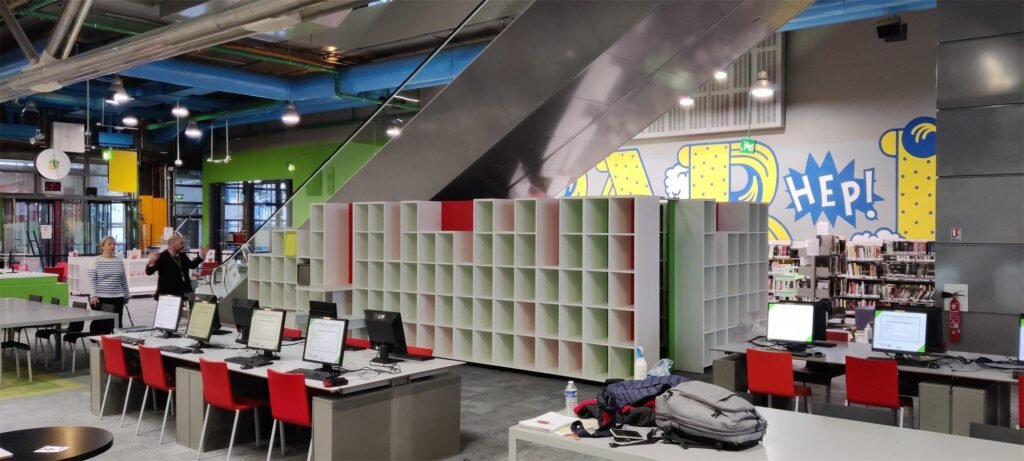
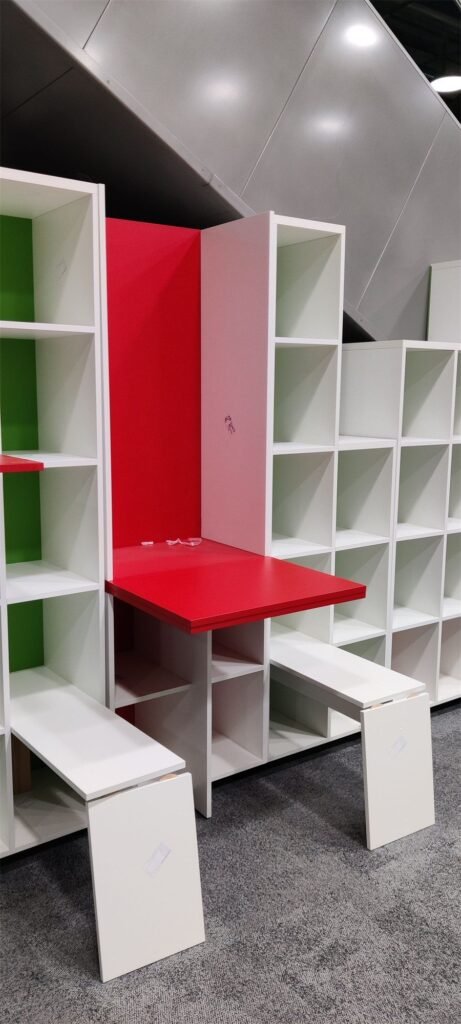
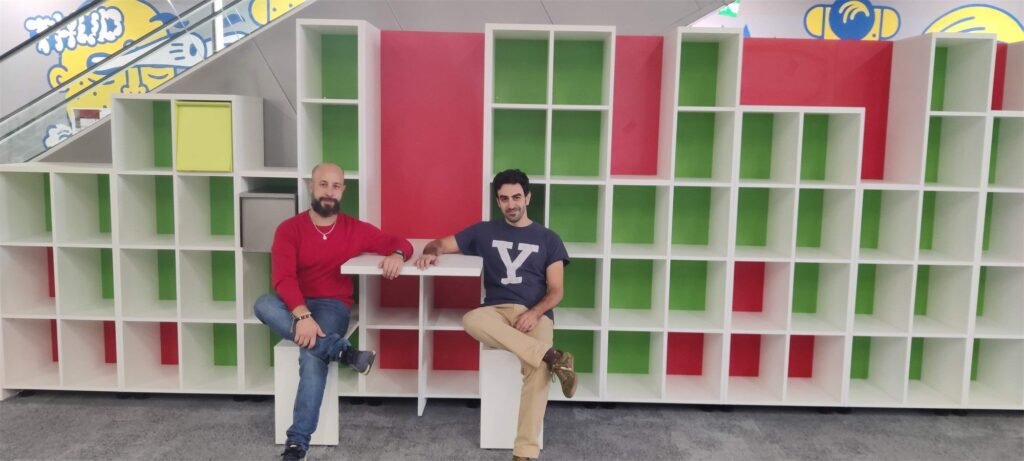
The largest piece fills the space beneath the library’s internal escalator. The stepped shelving follows the slope of the escalator and combines open book storage with a red fold-out desk and benches, so one wall works as storage, reading nook and seating.
Study counters, desks and workstations
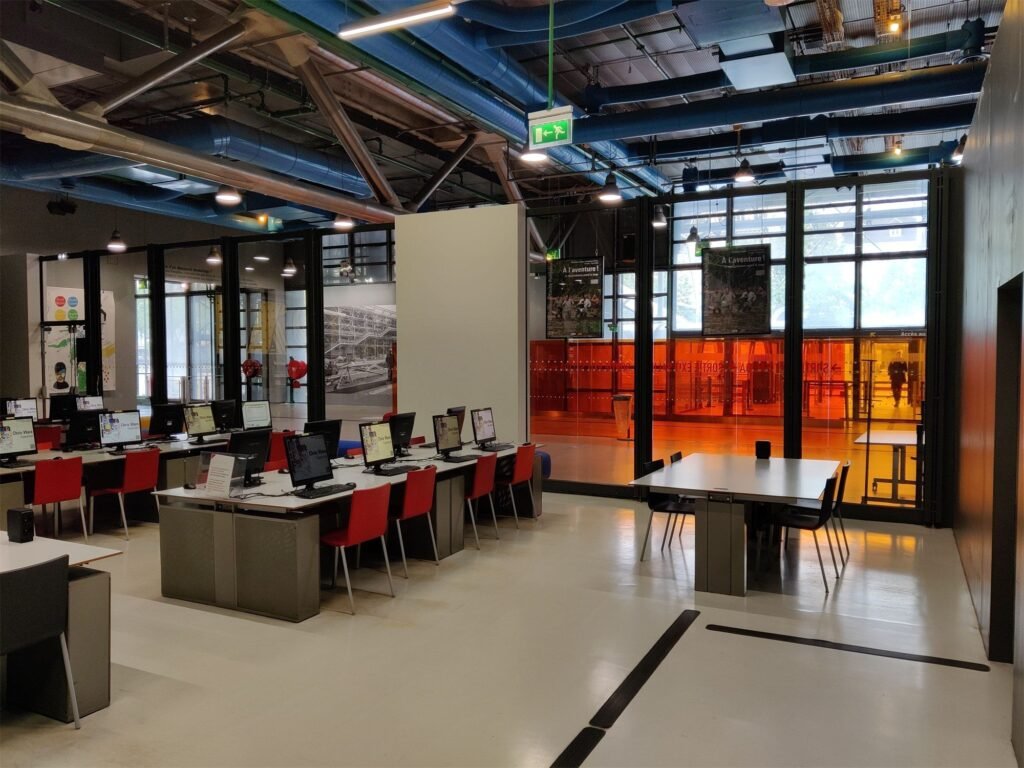
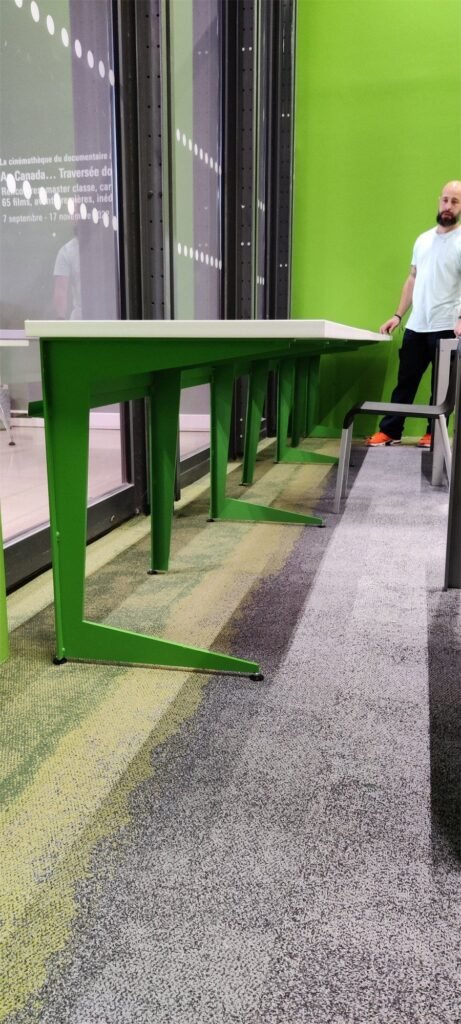
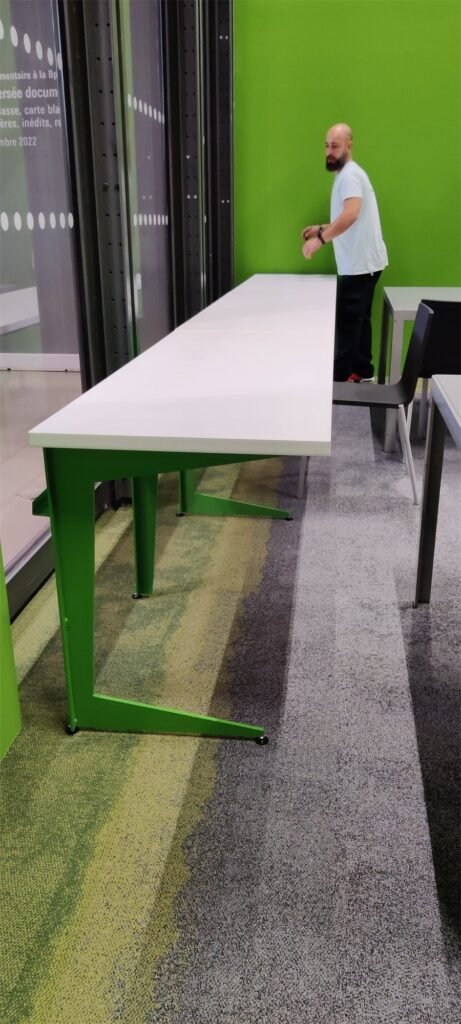
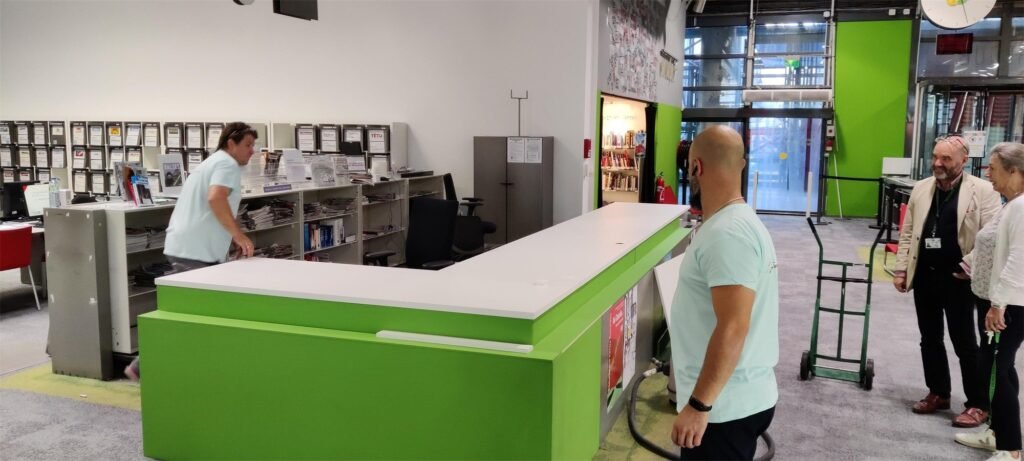
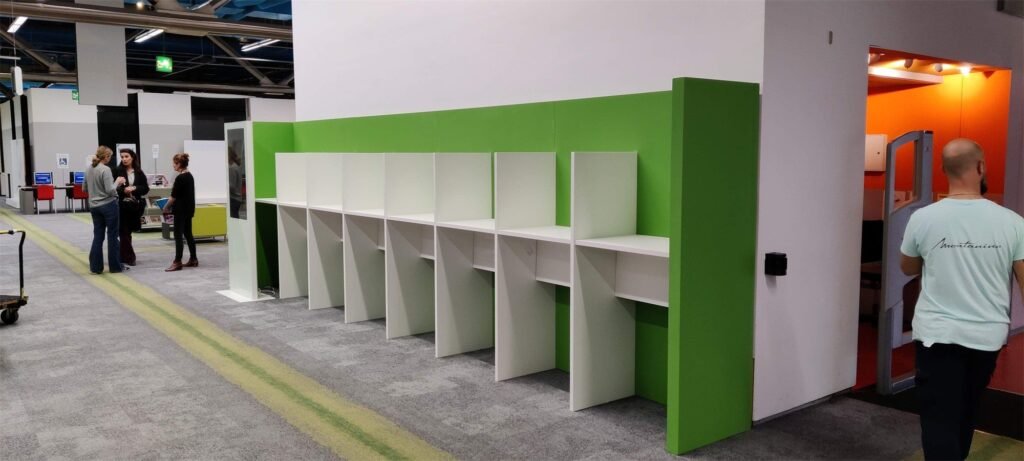
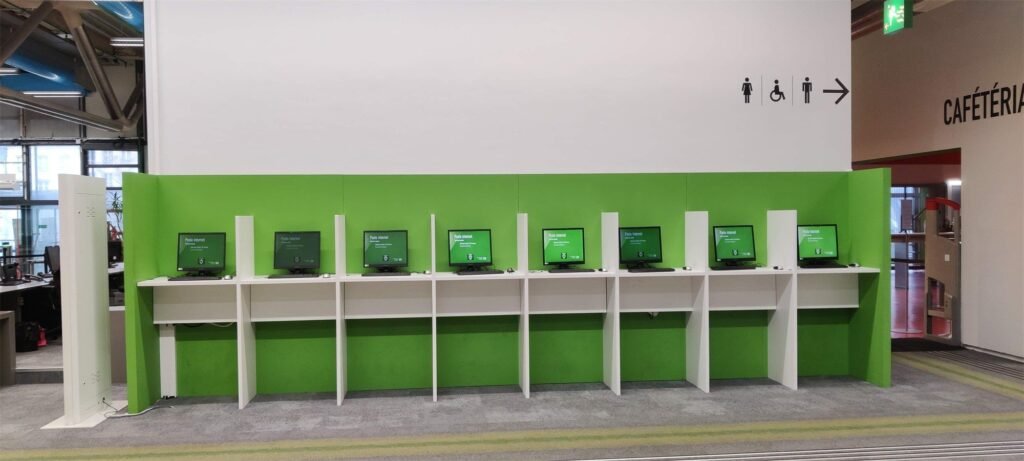
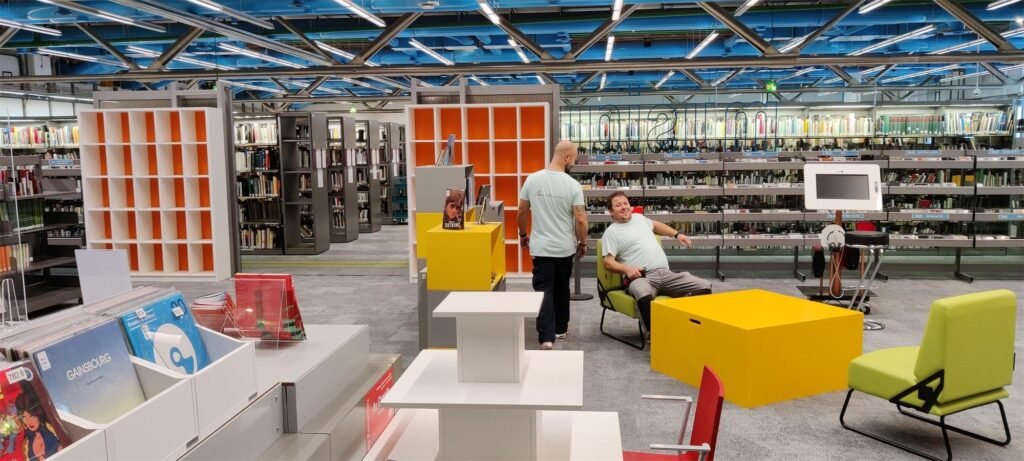
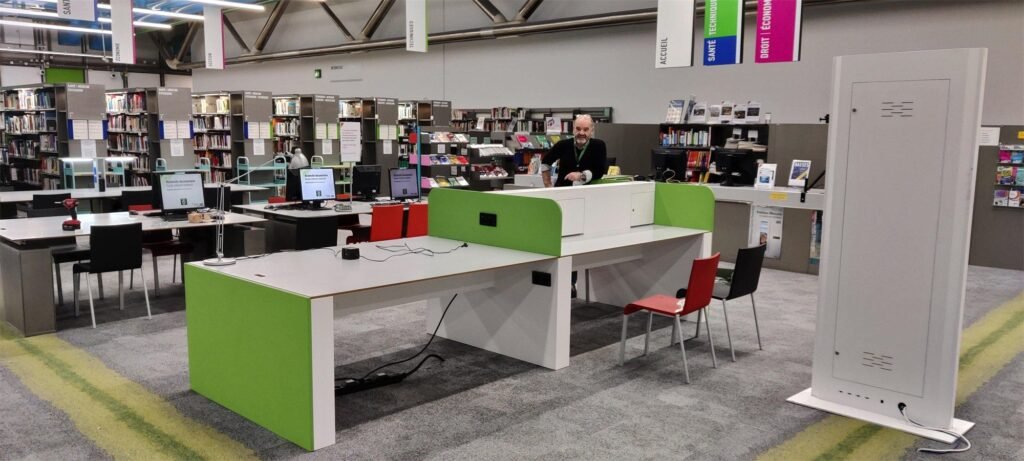
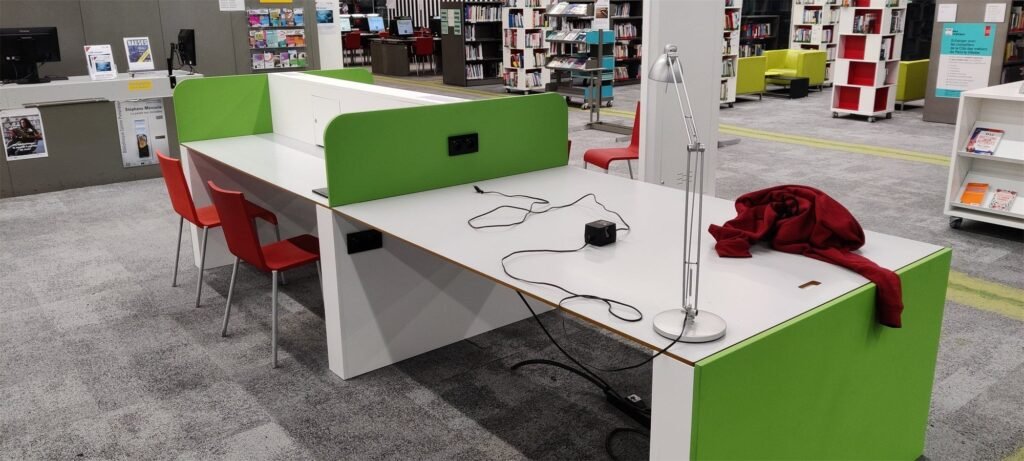
Slim white counters on green legs run along the glazed façade, giving readers a place to work next to the building’s exposed structure. Elsewhere in the library: a green and white information desk, reading tables with green divider panels, a row of internet workstations with white dividers on a single green backboard, and orange shelving in the music area.
Reading islands
Reading islands with integrated power, assembled in the library in 2024.
After Beaubourg
The Centre Pompidou has closed for a renovation that will last until 2030. During the works the BPI continues in a temporary home in the Lumière building in Bercy, where many elements from Beaubourg were reused alongside new furniture. There Andrés was lead furniture project architect for the new library, a far larger commission. See the BPI Lumière project.
“I would love to see most of the designs I made not only hold up well over these years, but be reused in the new centre.”
Andrés Mariño Maza, in Arquitectura y Diseño (translated from Spanish)
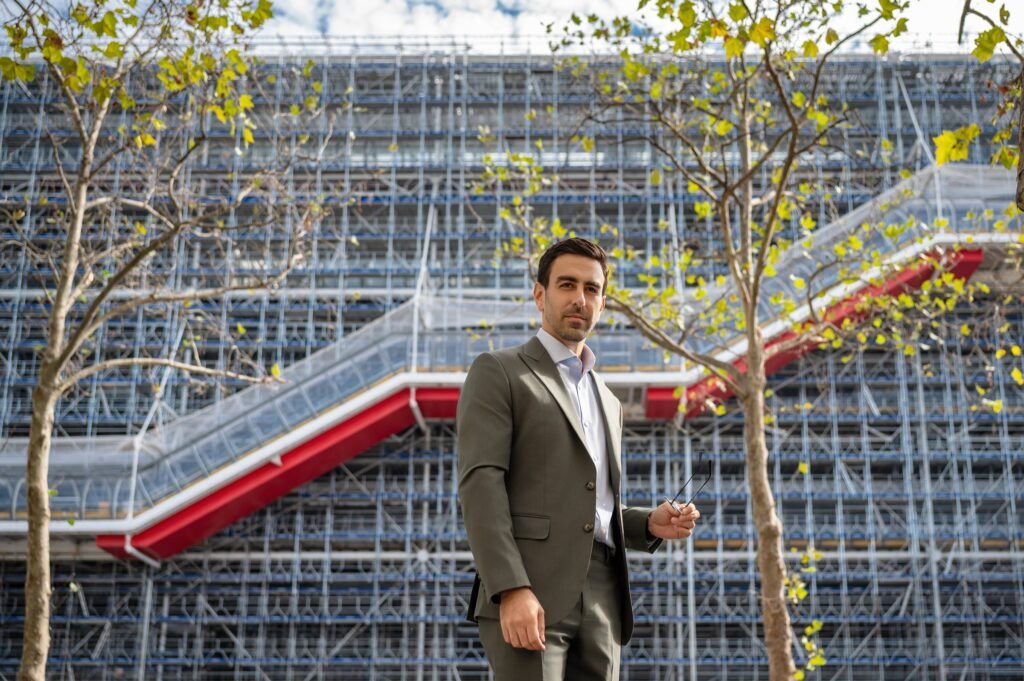
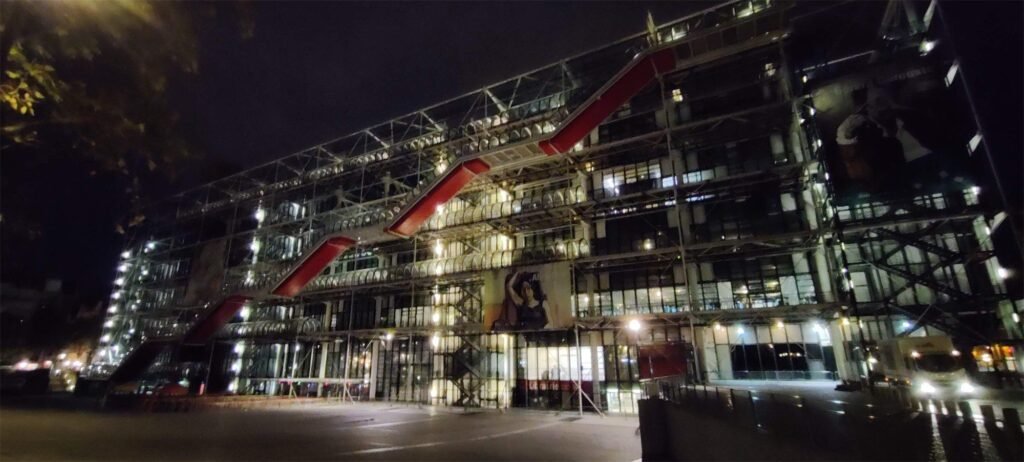
Photography: Seb
Drawings
Design drawings for some of the pieces, 2022.
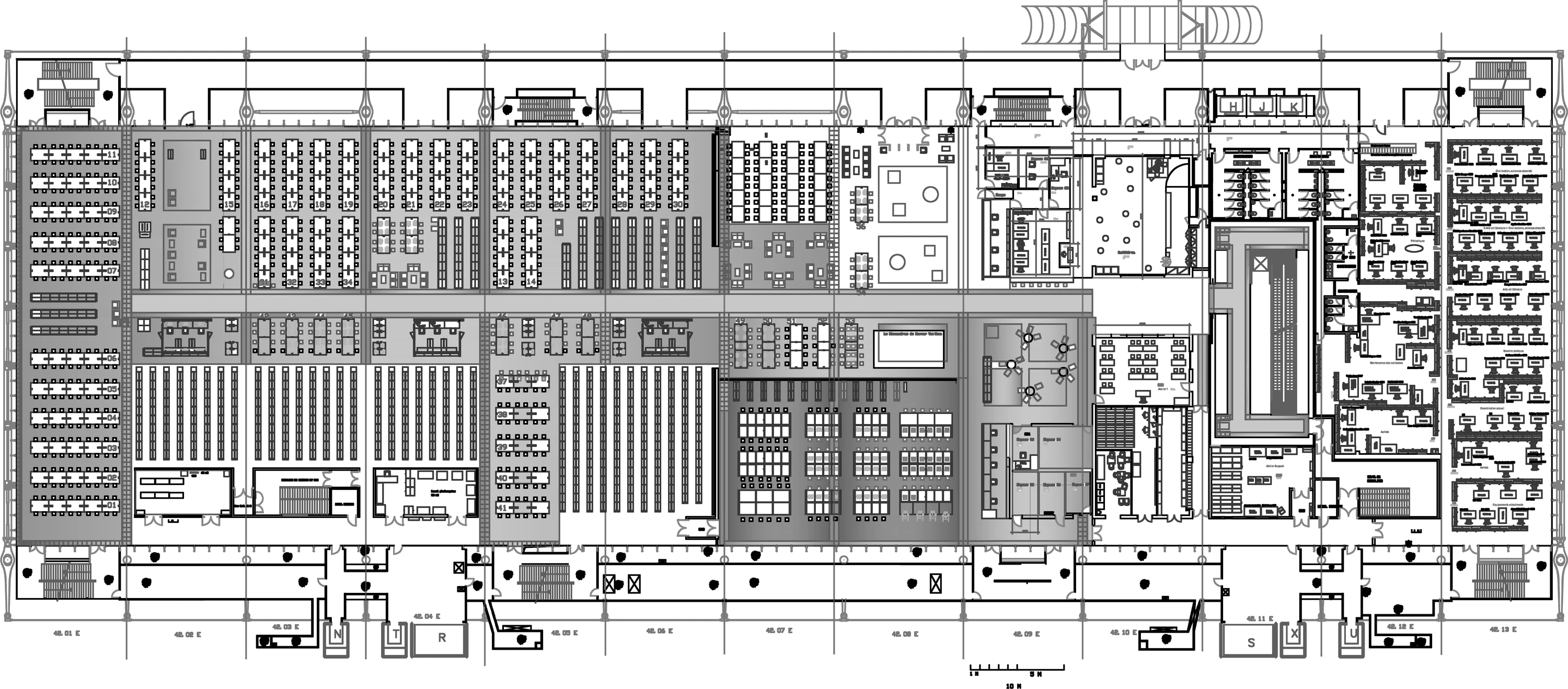
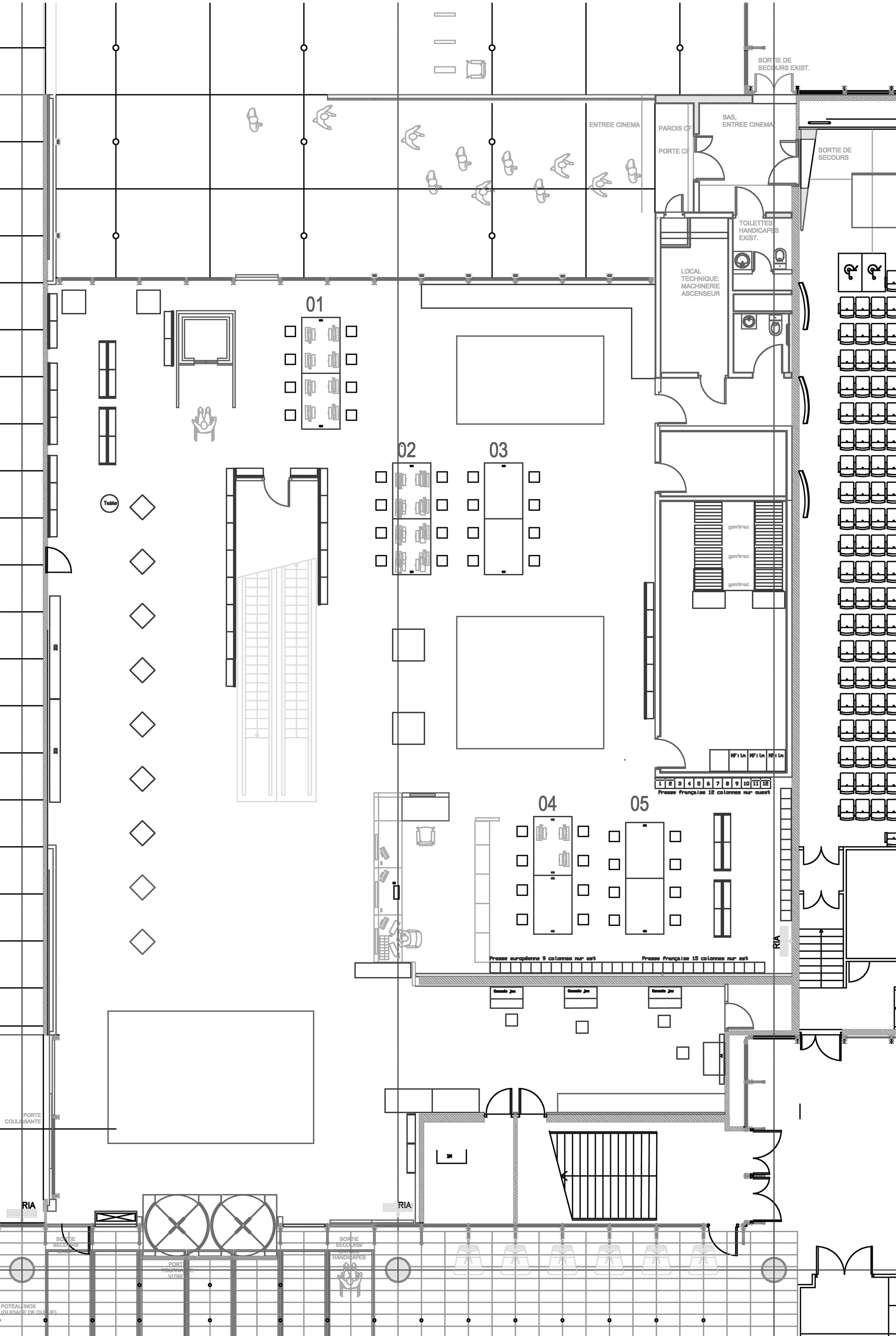 Level 1 floor plan.Level 2 floor plan.
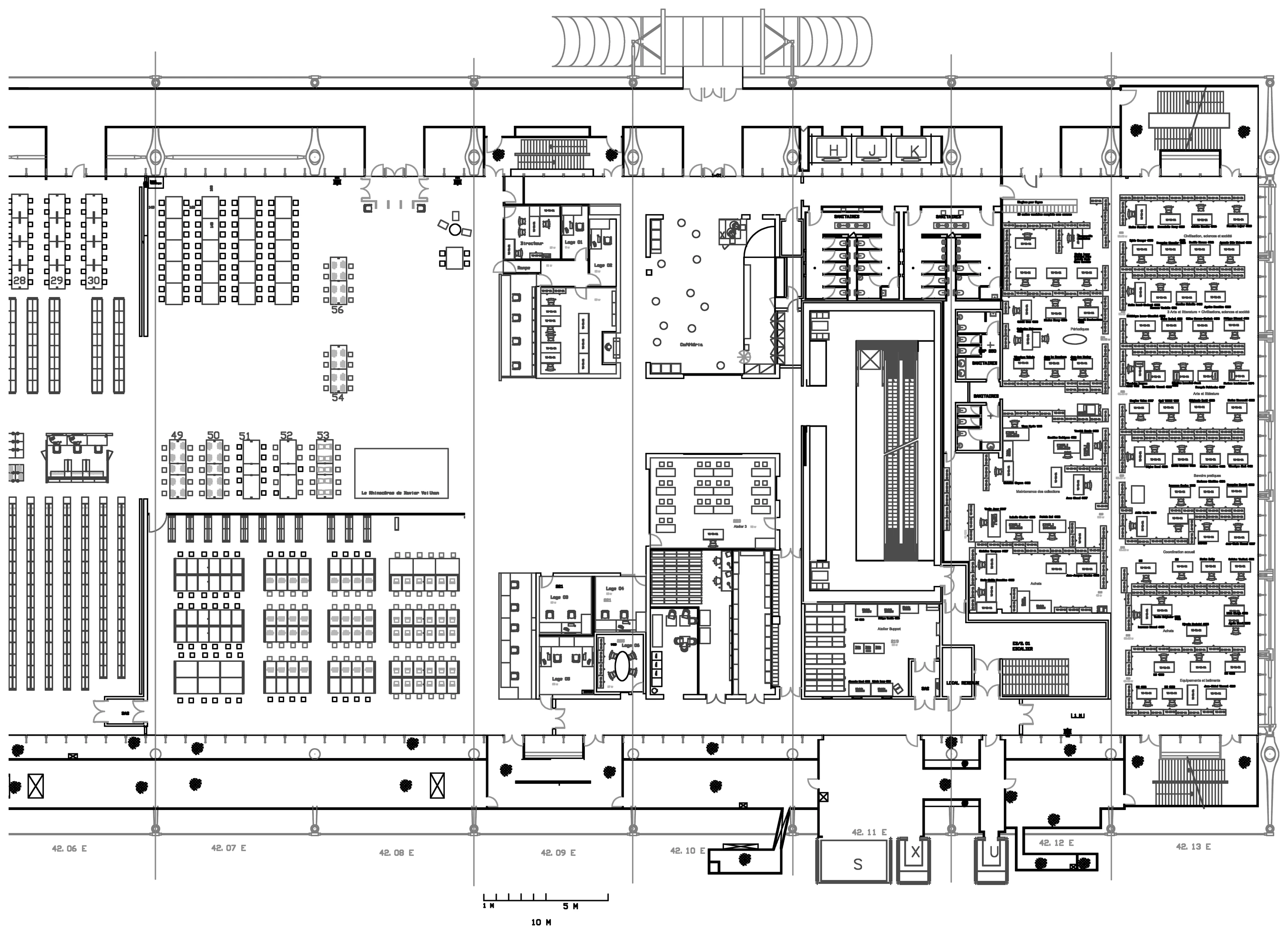 Level 2 floor plan, partial view.
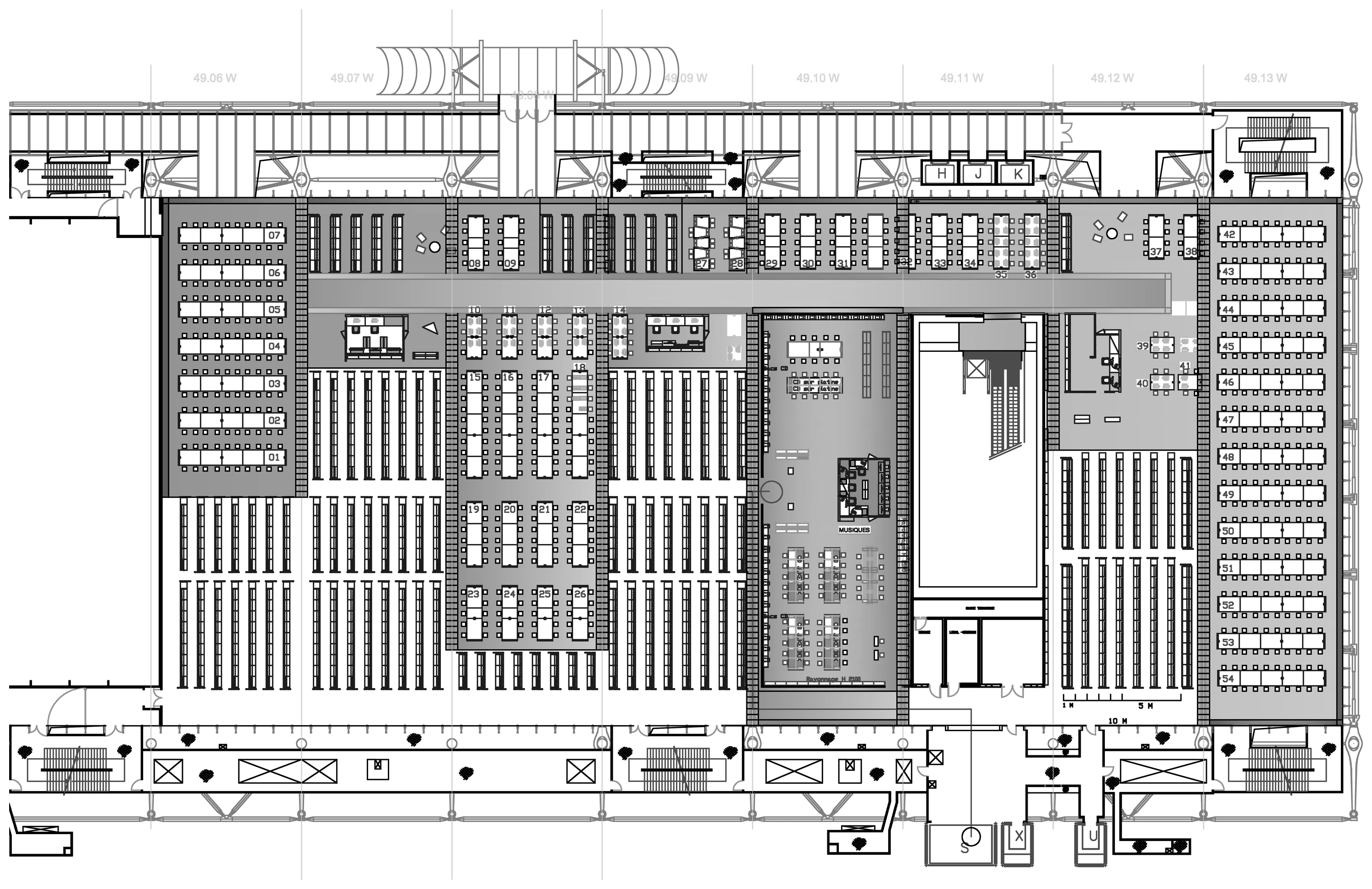 Level 3 floor plan.
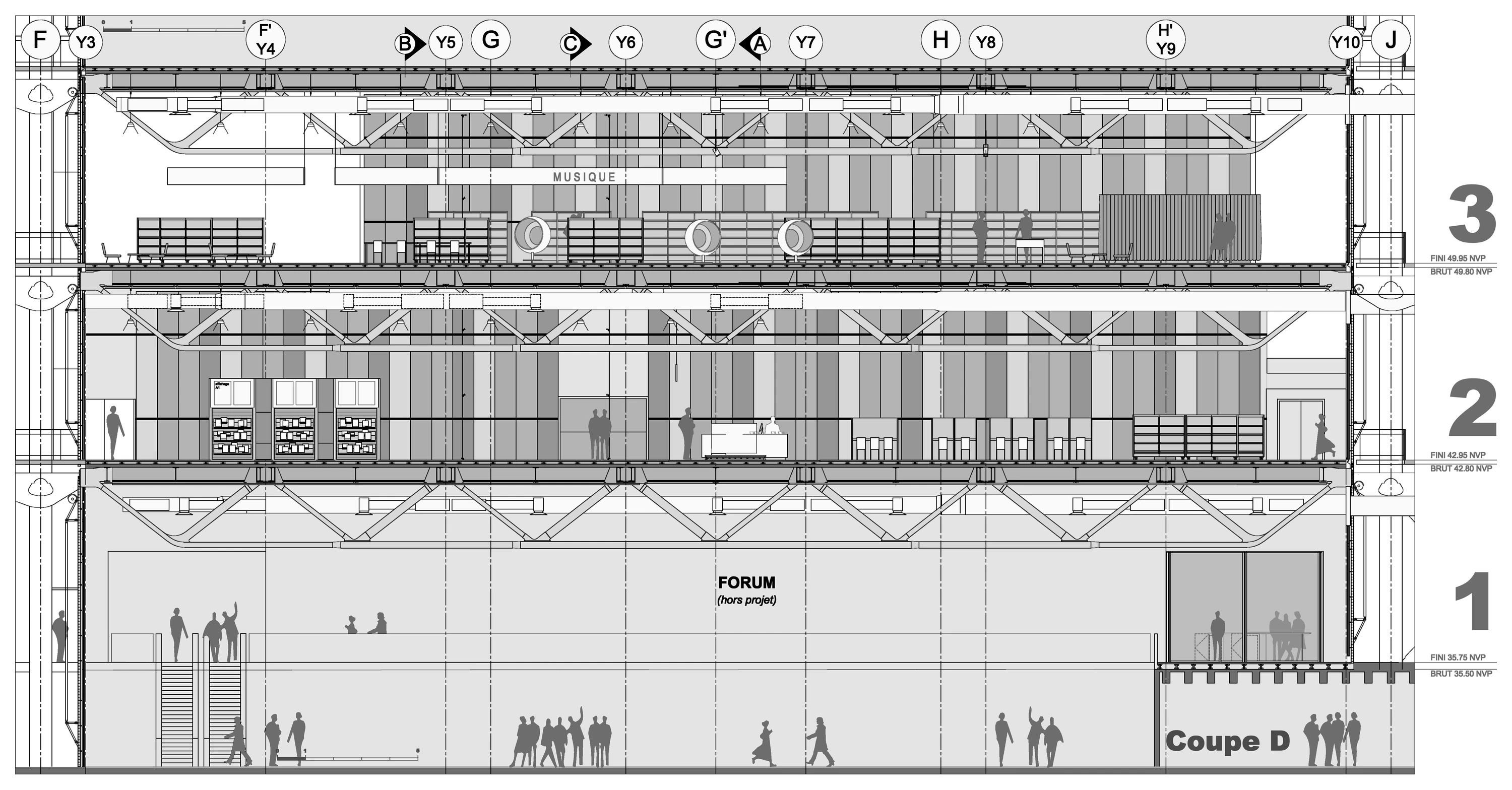 Cross section D.
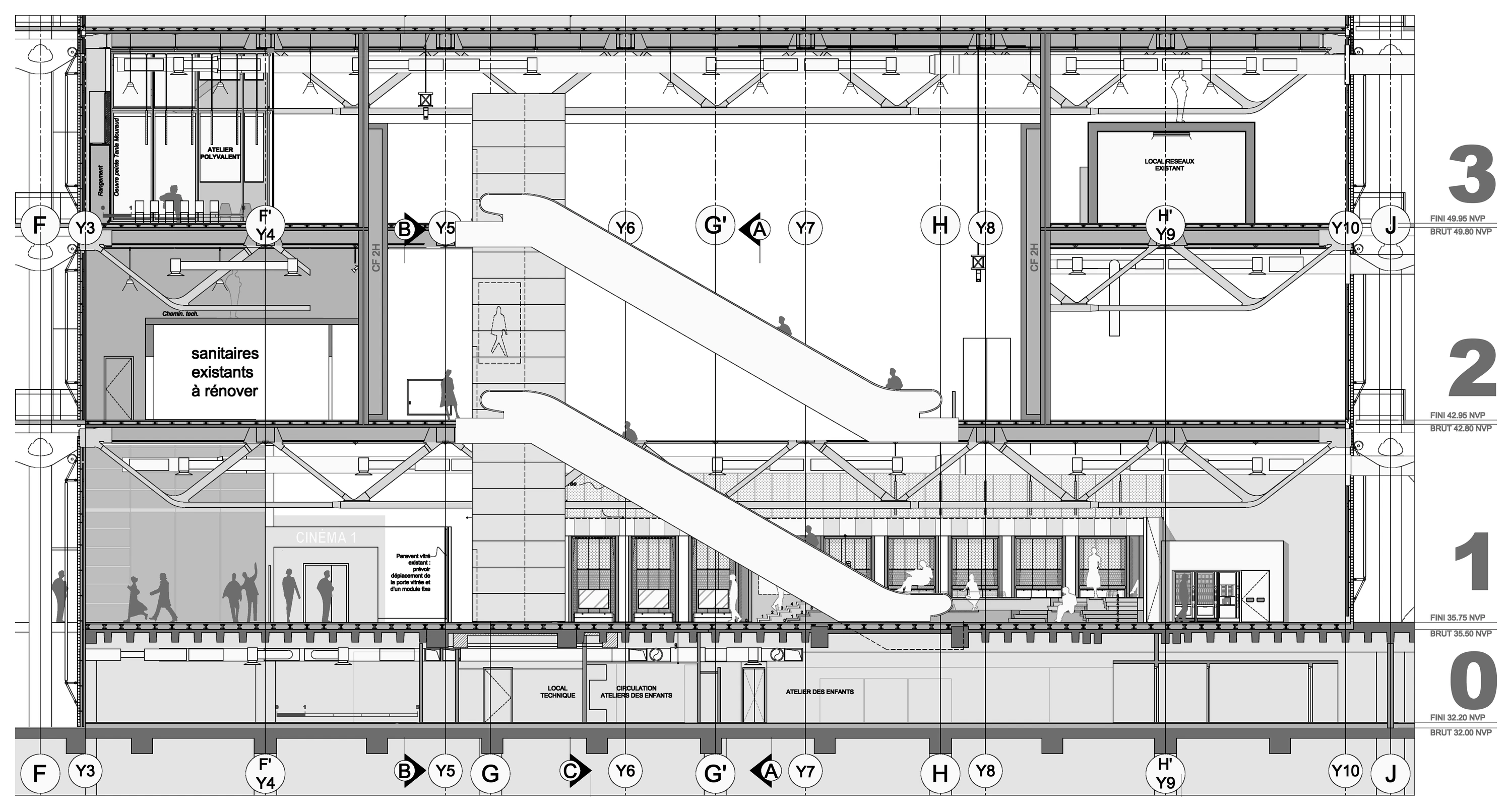 Cross section F.
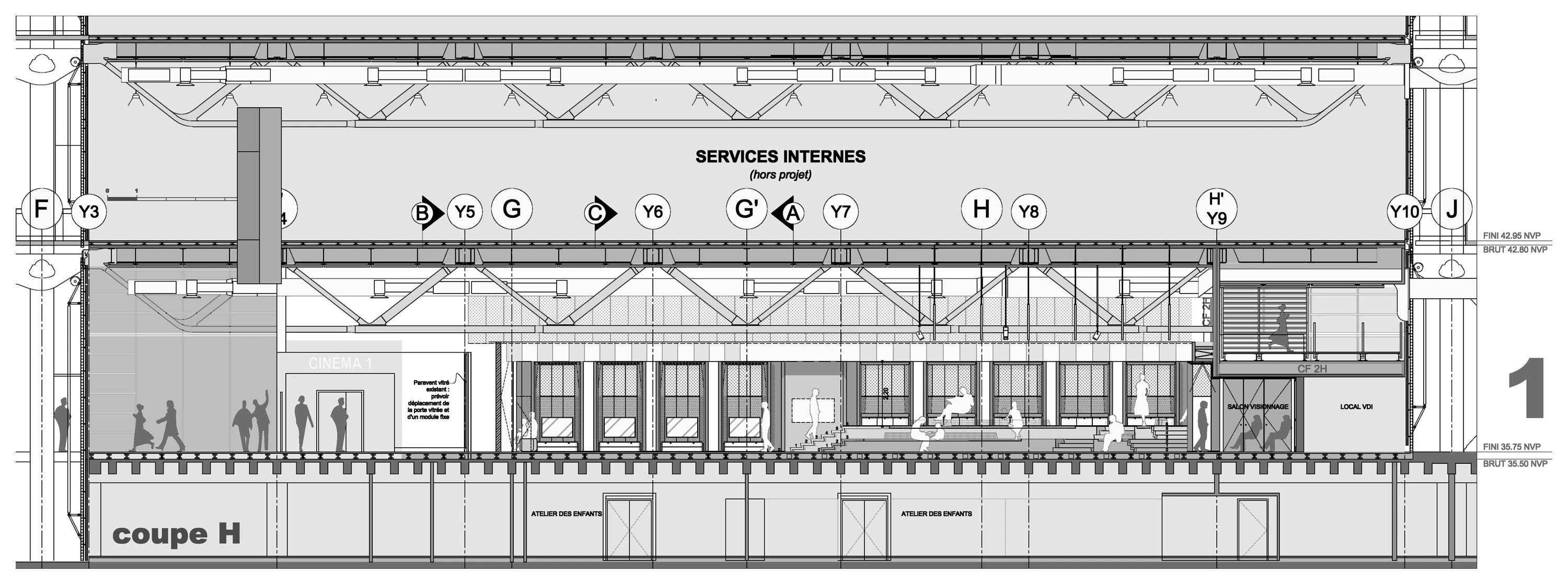 Cross section H.
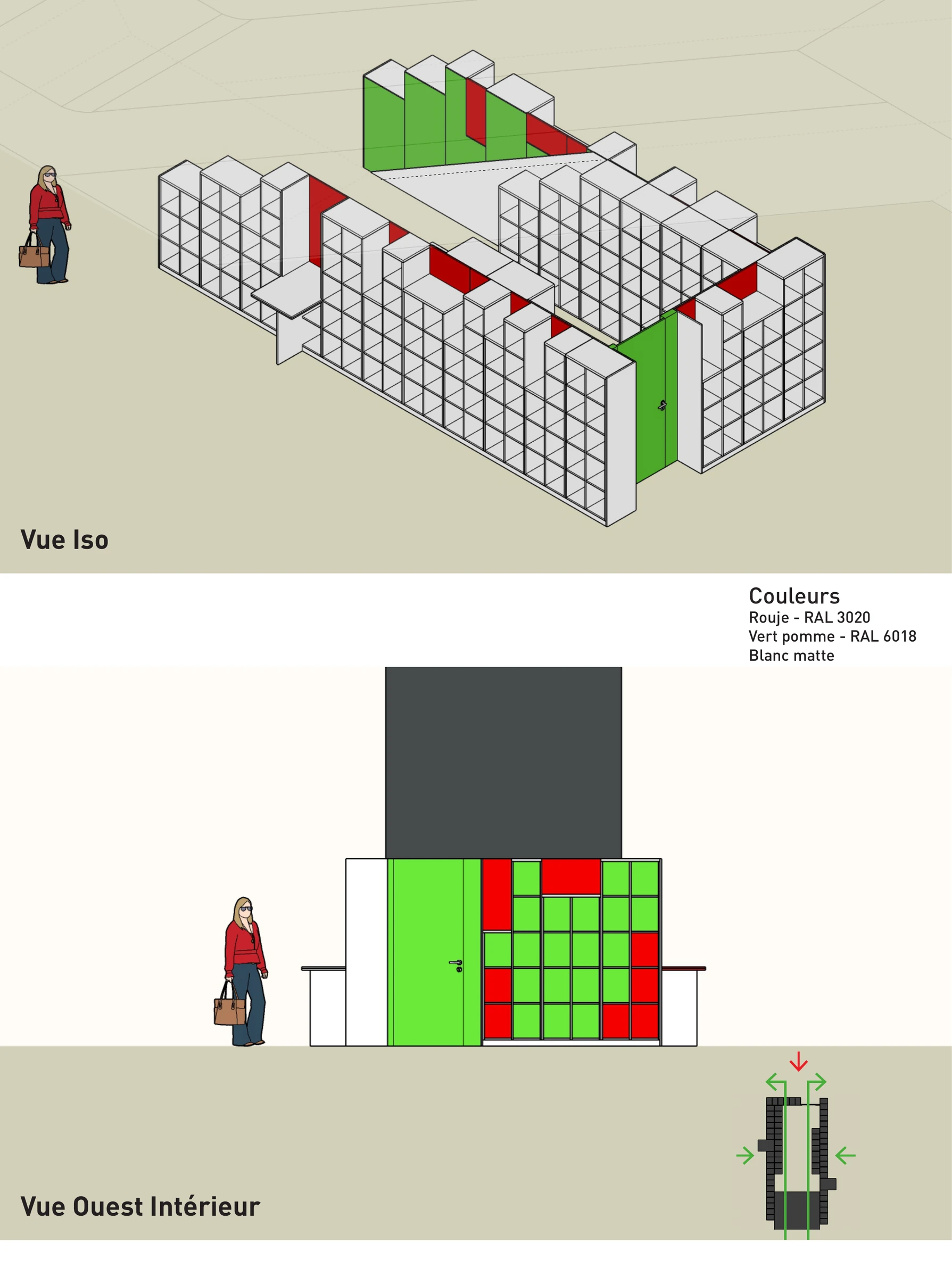 Shelving wall under the escalator. Views.
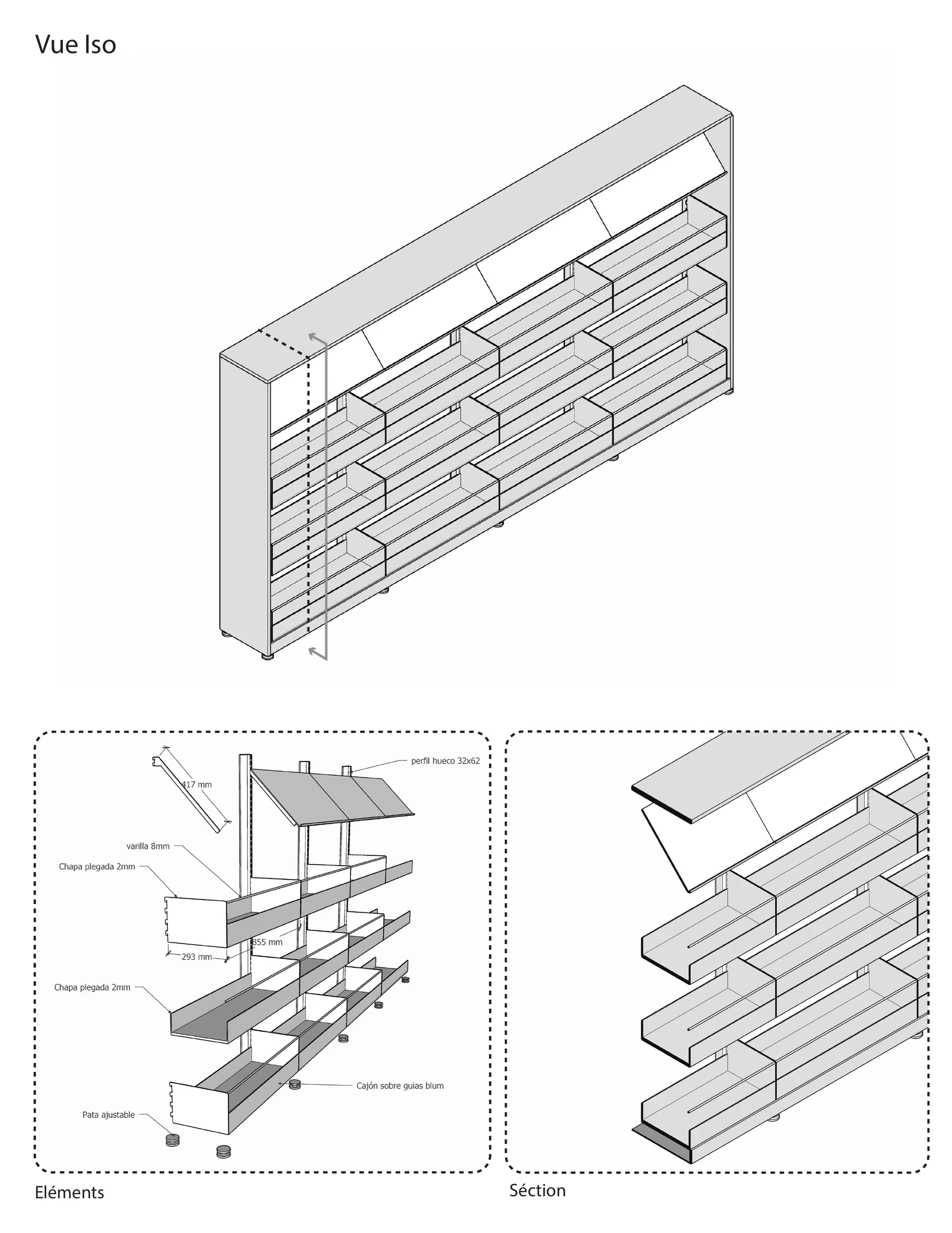 Comics shelving. Assembly views.
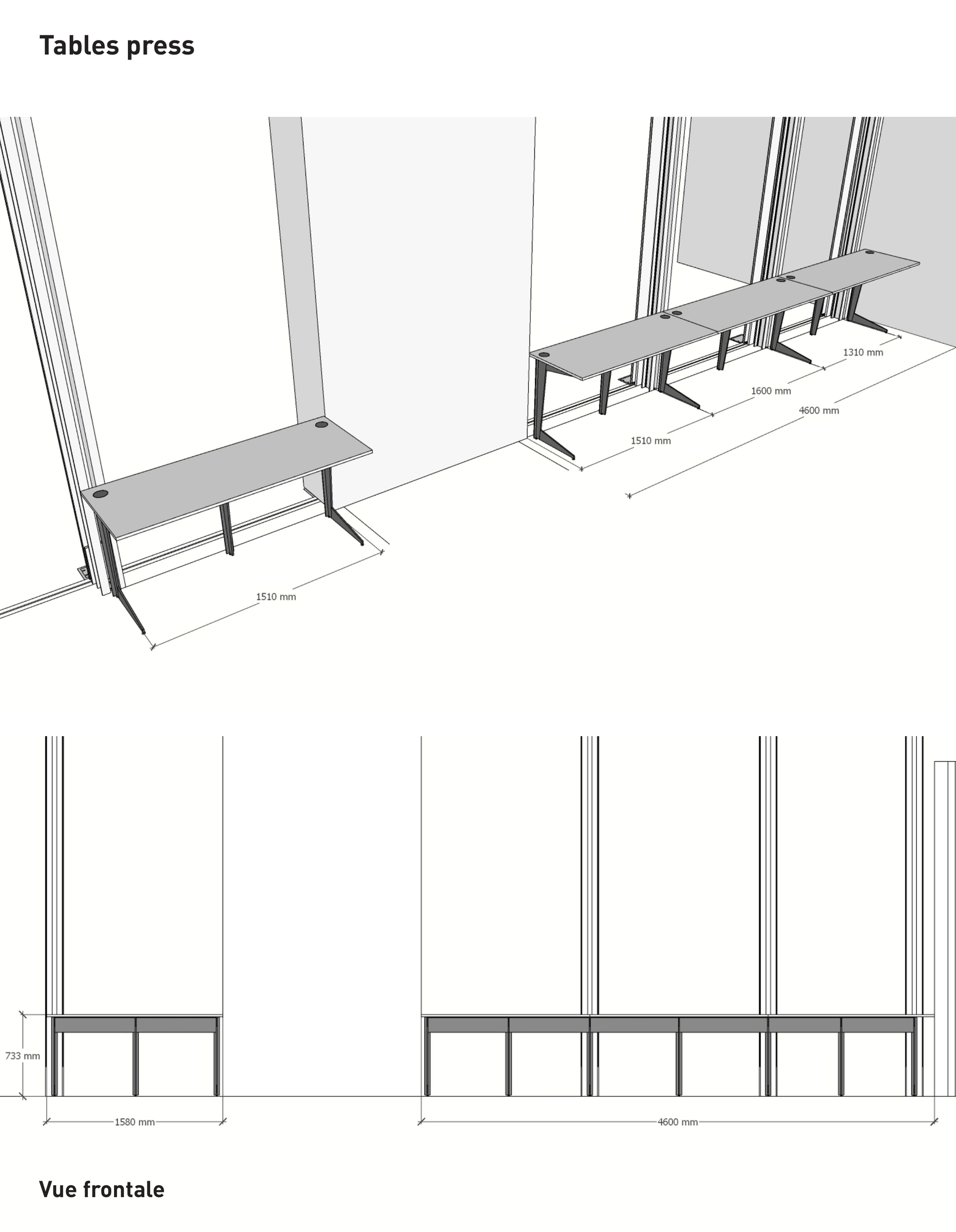 Press reading tables along the façade. View and elevation.
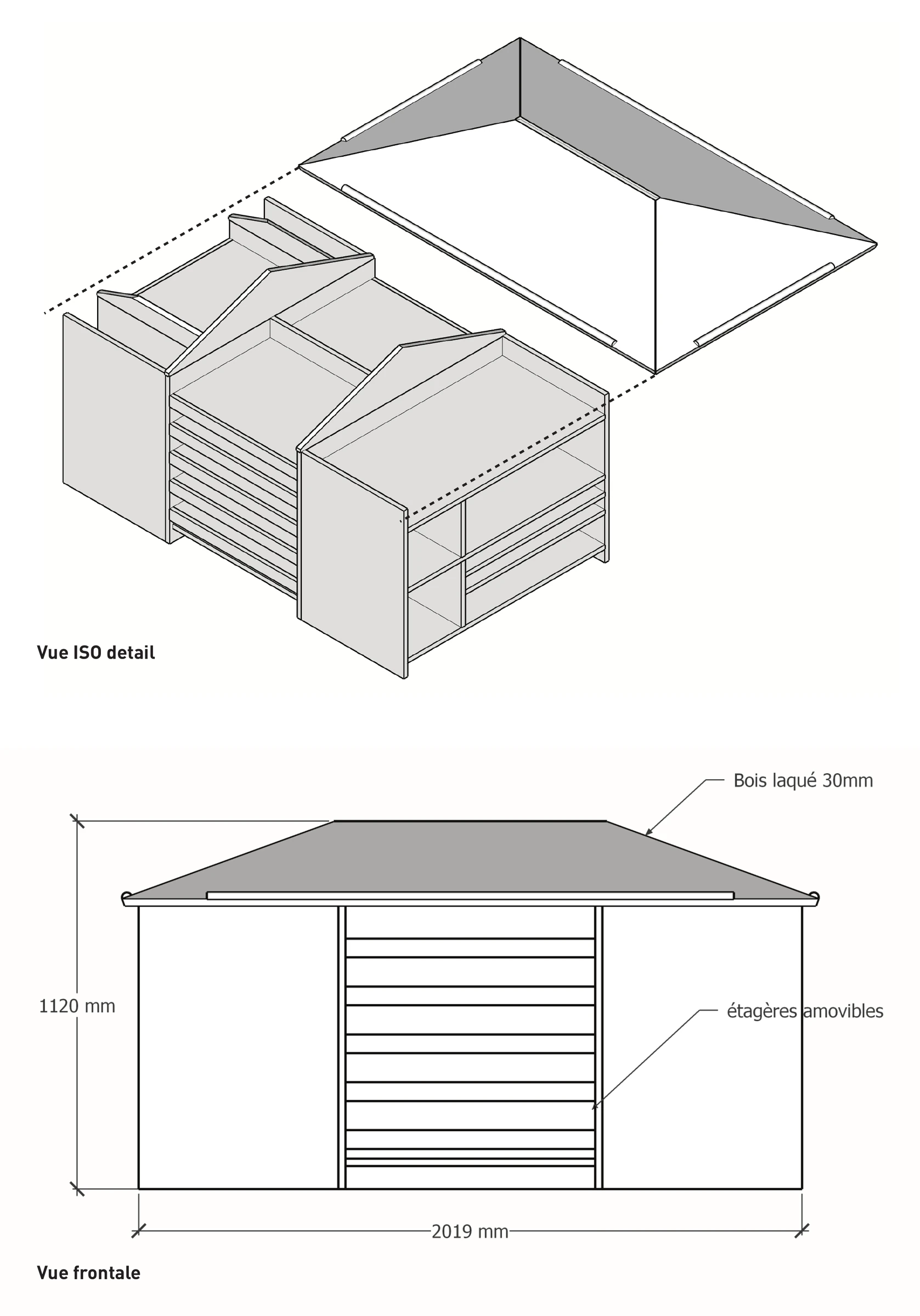 Cabinet for atlases and art books. Exploded view and elevation.
Press
- Arquitectura y Diseño: “Andrés Mariño, diseñador para el Centre Pompidou: Las bibliotecas ya no son lo que eran hace 50 años, pero siguen siendo esenciales” (Gala Mora, 16 November 2025)
- The Objective: “Del taller a París: así diseñó Andrés Marino más de 500 piezas para el Centre Pompidou” (Sara Duque, 1 November 2025)
- BIA no. 323 (Colegio de Aparejadores de Madrid): “Nueva lectura. Biblioteca Pública Centro Pompidou” (Carlos Page; photos Simon Guesdon, © Interface; 2025)
Frequently asked questions
What did Andrés Mariño Maza design for the Centre Pompidou?
Custom furniture for the Bibliothèque publique d’information (BPI), the public library inside the Centre Pompidou: about 50 pieces, including shelving, study counters, reading tables, internet workstations and reading islands.
What was Andrés Mariño Maza’s role?
He led the furniture project from start to finish: design and development through to production, coordination and organisation of all shipping and installation in Paris, and liaison with the public client and its officials. Fabrication was carried out by woodworking and metal workshops in Spain, shipping by Spanish carriers and installation by French and Romanian teams, all coordinated by him.
When was the furniture made?
The proposal was made in 2021 and the project ran from 2022 to 2025. The main renovation works in the library took place from July 2022 to March 2023, while the library stayed open.
Where was it made?
In Spain, by woodworking and metal workshops, using certified, locally sourced wood, CNC cutting and a tool-light assembly system for installation on site.